
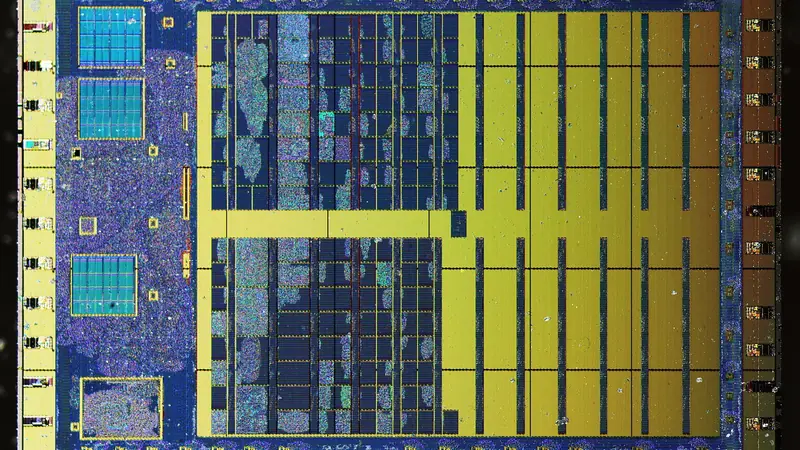
TYLsemi Launches $43M Chiplet Platform to Halve Custom AI Silicon Cost
TYLsemi's $43M launch brings reusable connectivity, power and memory chiplets to hyperscalers, with up to 50% lower development time and cost.
Read more
TYLsemi's $43M launch brings reusable connectivity, power and memory chiplets to hyperscalers, with up to 50% lower development time and cost.
Read more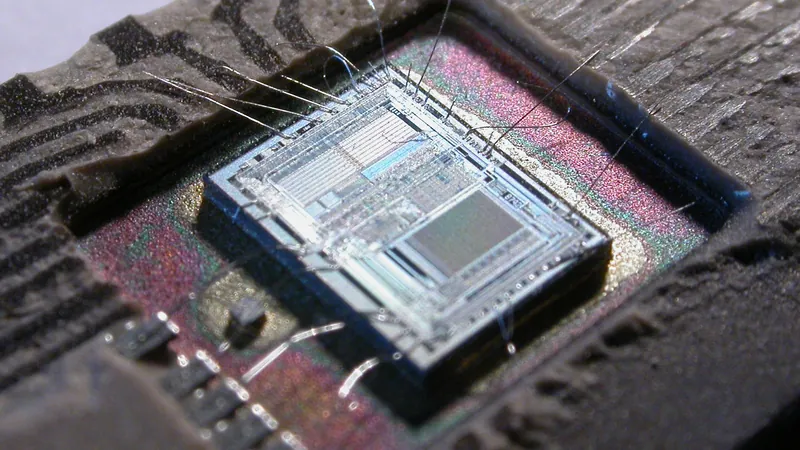
Broadcom's $60B debt syndication for Anthropic TPU access, plus margin pressure and collateral risk, signals a shift in custom AI silicon economics.
Read more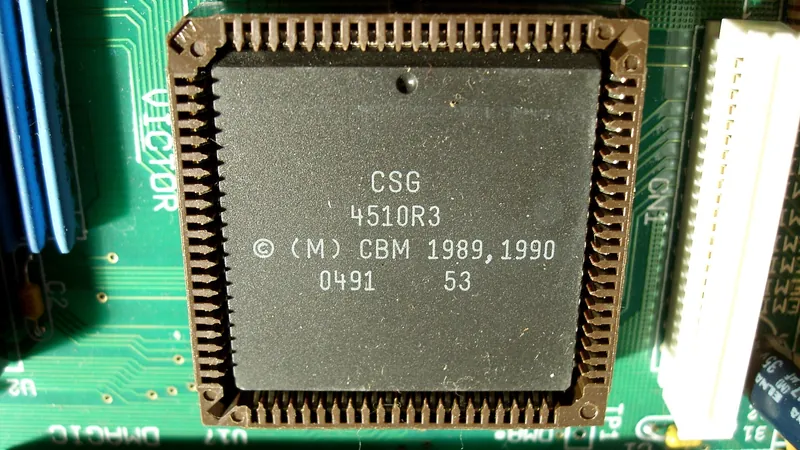
Architectural comparison of Arm Neoverse, Qualcomm Cloud AI data centre chips, Apple unified-memory silicon and Tesla autonomous AI processors.
Read more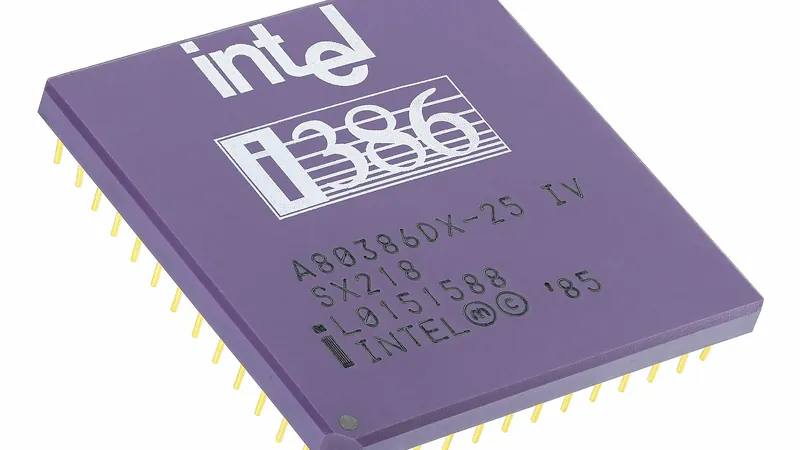
Architectural analysis of Meta MTIA custom AI chips and AMD Instinct MI325X (late 2025) through MI355X and MI400 (2026) hyperscaler GPU deployments.
Read moreThe Chipmakers desk on AI Chips News Today covers data centre GPU architectures, custom hyperscaler ASICs (XPUs/TPUs), modular chiplet design and high-bandwidth memory (HBM) integration. For engineering teams tracking GPU AI chips news today and semiconductor news today across NVIDIA and AMD AI chips, competition now centers on three physical bottlenecks: low-precision tensor throughput (FP8, FP6 and FP4), per-socket HBM capacity and die-to-die interconnect efficiency.
NVIDIA’s Blackwell Ultra (B300/GB300) and Vera Rubin NVL72 architectures pair 4-bit micro-scaling (NVFP4) with 72-GPU NVLink domains. Meanwhile, AMD’s Instinct MI325X (256 GB HBM3E) and 3nm CDNA 4 MI355X (288 GB HBM3E) prioritize maximum memory capacity per OAM module to hold massive Mixture-of-Experts (MoE) models in local package memory.
Merchant GPUs face growing competition from custom application-specific integrated circuits (ASICs). Read our analysis on Broadcom’s $60B custom TPU infrastructure syndication, Meta’s MTIA inference silicon, TYLsemi’s modular chiplet platform and SK hynix’s 2,048-bit HBM4 memory.